Thursday, 27 February 2014

Lahore International Film Festival celebrates young film-makers

The event was attended by notable names in the entertainment industry including film-maker Syed Noor and acting veteran Salman Shahid. PHOTOS: PUBLICITY
LAHORE: 
The growing trend of film festivals in Pakistan and their promotion of film novices have frequently been discussed and duly appreciated. An ongoing festival, which has been showcasing the true potential of young film-makers, is the inaugural Lahore International Film Festival, dated February 25 till February 28.
The event, which is taking place in collaboration with Summit Entertainment and Super Cinema at the Royal Palm Golf & Country Club and Vogue Towers, is providing screen space for several short and independent films.
http://i888.photobucket.com/albums/ac89/etwebdesk/etwebdesk001/etwebdesk001002/DSC_7754copy_zpsf8afa396.jpg
Many young film-makers who were selected from local universities, such as the Beaconhouse National University (BNU) and National College of Arts, have been focusing on creating films that highlight social issues and are relatable for a global audience.
Lubna Khaleeq’s film Walled City Painter offers an activist’s view of the lives of renowned old city artists, like Ajaz Anwar and Saeed Akhtar. She says that she decided to make a film on her mentors, who she feels are not valued locally.
She adds that young film-makers have been inspired by the likes of Sharmeen Obaid Chinoy, who received international acclaim with the Oscar success of Saving Face. She also highlights the challenges that new film-makers are faced with, which are not only limited to garnering local success, but also include achieving financial security.
http://i888.photobucket.com/albums/ac89/etwebdesk/etwebdesk001/etwebdesk001002/DSC_6590copy_zps9e3c7e47.jpg
“The thing is my generation has many issues to face. I really have no secure future and the same is the case for the coming generation. We get more feedback when we focus on issues that can resonate internationally,” says Khaleeq.
This is where the idea of film festivals comes to good use. As they do in India and France, film festivals provide a central point for film-makers who are working on the fringe to meet members of the film fraternity.
There are several other films, such as Nasir Mazari’s thesis project Life, a ten-minute documentary on poverty near the river Ravi in Lahore. Mazari says his intent is to shed light on poverty-stricken settlers near the river bank. He says international festivals tend to favour such stories and that they remain a driving point for many young film-makers who want to be noticed.
“I think what I wanted to show was not that there was poverty, but that whatever their [the settlers’] lives are like, they are satisfied with them,” says Mazari, who hails from Rahim Yar Khan and was BNU’s first film graduate gold medallist.
He says that he is more comfortable with the documentary film-making format, which allows one to work with a smaller budget. He did, however, do a short film based on Saadat Hasan Manto’s character Sugandhi, which has received recognition locally.
“We are talking about realities and Manto’s writings epitomise reality and society. A lot of his stories are still banned. I think that’s [because he intended] to show the real thing,” adds Mazari.
While issue-based film-making is on practicalities, Siyaah’s producer Imran Kazmi, who is also screening his film at the festival, indicates that it’s merely a trend and that he would encourage film-makers to follow their hearts rather than any formula.
“The truth is making films with social messages requires less work and money. I tell young film-makers that they have to follow their hearts and not a trend,” says Kazmi.
The festival’s format is focused primarily on screening films and bringing forth new film-makers. “I think the discussion format really just ends up being all about ‘talking.’ This [format allows] audiences and people who are aspiring to become film-makers to focus more on what is being screened than anything else,” comments Kazmi.

Tuesday, 25 February 2014

Sultan Rahi’s wax statue to grace Madame Tussauds

sultan
Ever watched a film and felt this person deserves a waxwork at Madame Tussauds? Well, that is exactly how I felt for the late legendary actor Sultan Rain, a Pakistani legend. The idea came to a fan while he was watching Maula Jat in London and a particular scene where Sultan Rahi visits Madame Tussauds. While there, he surprises his co-star, Aasia, with his waxwork. But that is not the reason why the fan wishes to see a waxwork of him – oh no. Sultan Rahi made an immense contribution to Pakistani cinema and his work speaks volumes. He is reportedly mentioned in Guinness World Records; acted in over 700 Punjabi films: won over 100 film awards, and gave hits like Maula Jat, Sher Khan, Chan Veryam, and lots more.
Earlier this year, the fan contacted Madame Tussauds to notify them, that a Sultan Rahi waxwork would be a great addition and very popular among its South Asian visitors. He was later informed that, they received thousands of various requests from people each year and they would consider his request towards the end of the year when they plan for the 2015 waxworks. They have, as a result, added Sultan Rahi’s ICI in their ‘figure request list’ which is a great news for the Pakistani legend. Well, fingers crossed, if all goes well, a waxwork of Sultan Rahi could be coming to Madame Tussauds.
This article is authored by Mr Attique Rehman. It appeared on www.showbizpak.com.

Sunday, 23 February 2014

Ahsan Khan awaits ‘good offer’ from Lollywood

ahsan
British born Pakistan actor, model and host, Ahsan Khan said that he will surely work in a Pakistani movie, only if he gets a good offer.
He said, “I will prefer to do work in good movies. My work in Ishq Khuda is appreciated and if I am offered good scripts than why wouldn’t I work.
He further said my identification is film industry and I am proud of it. Whenever I got any offer I will re-manage my schedule to work in movie.
With latest technologies, new producers, unique concepts and heavy budgets, not only in Karachi but across Pakistan, our film industry is improving, he added.
Ashan said if we see the statistics then we can easily notice that last year Pakistani movies did more business than Indian movies and that’s a great achievement.
He continued saying that I have always done good roles in movies. When Shehzad Rafiqu offered me role in Ishq Khuda I accepted the work, he added.

Saturday, 22 February 2014

Laiba Khan all set to make her directorial debut with film “Safari”


laiba-khan
 Famous Pakistani model Laiba Khan is all set to make her debut film as a director/producer “Safari. She shared that her debut film as director will attempt to revival of Lollywood industry.  She proclaimed that the film will be shot in Karachi, Lahore and Dubai.
Laiba Khan stated the film’s cast will include renowned senior artistes. The film-maker and director Laiba Khan said her film will feature newcomers as well since she feels that Pakistan is brimming with fresh talent.  She also said that newcomers can contact her anytime. While, Ahmed Riaz will be the co-producer of this new film.

Thursday, 20 February 2014

Meet Ali Sade, the man behind Kanebaaz

Siddiq (Mohib Mirza), a small-time hustler rises from the streets of Kharadar to Karachi’s high society where his card-counting skill is recognised by the infamous Bawan Shah (Faisal Rehman). PHOTO: FILE
LAHORE: 
Based on real events, Kanebaaz is about the bond between two men, one who is self-assured yet torn and the other who desperately needs a mentor to give credence to his skill and entity. Kanebaz offers a harsh glimpse of Karachi, where a queen in the pocket doesn’t always make one a king. The Express Tribune delves in a thorough conversation with the man behind this brilliant Lollywood drama film, Ali Sade.
Kanebaz is interesting on many levels; describe your state of mind when you decided to make such a film?
After directing my first British film, Somnolence, my attention turned to Pakistan. Having spent a considerable amount of time in Karachi, I was amazed by its charm and diversity. When the opportunity to make a Pakistani film came along, I made a conscious decision to ensure that I captured Karachi’s diversity. I observed the wealth of different cultures on the streets of Karachi — be that in dialect or architecture. Most of the local dramas and telefilms lack the true element of the streets of the metropolis. The local content is shot in Defence bungalows and the dialogue sound mostly upper class — the majority of people cannot relate to it. Therefore, I wanted to make a film that a common man can relate to. I wanted to make a film where you can feel Karachi — the heat, the intensity and the beauty. For example, in the beach scene, you can hear and feel the ambience of the seaside; the waves crashing, the sound of the camel chimes passing and the sunlight reflecting on water. This brings the viewer closer to the characters and also gives them a real feel of what it’s like on Clifton beach.
How did your interest in filmmaking develop?
I always knew I wanted to be a film-maker. Since the age of seven, I was passionate about films and since then, I had known that film-making is what I want to pursue as a career. When I think of my childhood, I remember that there were several instances in which I would find myself watching movie trailers and advertisements of certain films that I was not old enough to see. The fact that I wasn’t old enough to watch them used to make my imagination race wildly. I would use my own creativity; I’d deploy the possible stories being told in those films.
These early experiences laid down the foundations of my storytelling, which subsequently led me to study media, which eventually led me to making my own films.
Do you make an effort to not conform to traditional standards of formula filmmaking?
That’s very normal for me. If you watched Somnolence and then watch Kanebaaz, you will notice that the two films are structured very differently. In Kanebaaz, the narrative and shot construction is very linear whereas Somnolence is perhaps best described as French new-wave cinema. When approaching Kanebaaz, I made a conscious effort to make a film in a way that the Pakistani audience can best relate to.
The two things that stand out in your work are the comic elements and the slowed down action-sequences. Tell us about these?
When it comes to action sequences, my intention is to make them as real and exciting as possible. Imagine a batsman receiving a ball approaching him at a speed of 90kph. To the onlooker the event happens in a flash. However, if we look at it from the batsman’s perspective, he aims and hits the ball into a direction where he feels it will be safe to do so.
Within a split second, he slows the ball down in his mind and draws the moment out longer which mentally gives him more time to exploit it. I use that very same technique; we get to see that the character is slowing down in his mind and after the impact, we see a sudden increase in pace as it happens in real life.

Monday, 10 February 2014

FiLums 14 rises to the occasion

At the occasion, Resham discussed her decision to return to the film industry with a role in the film Swaarangi. PHOTOS: PUBLICITY
LAHORE: 
The 8th installment of the LUMS International Film Festival (FiLums), which began on Friday, showcased the creative knack and talent that students in Pakistan are brimming with.
Despite the fact that the LUMS student body comprises of students who are pursuing degrees in traditional fields of study, such as economics and engineering, many young minds are avidly interested in the dynamic art of film-making.
Their passion is reflected in the three-day-long festival, which constituted both in-person and virtual sessions with notable names of the entertainment industry from both sides of the border.
Kites Grounded
Saturday began with an interesting seminar on the yet-to-be released indie film Kites Grounded.
The film’s team includes producer-director duo Murtaza Ali and Seema Hameed, actor Tasneem Kausar and Ali Noor from the band Noori. Noor, who is one of the few people who have watched the film, is looking towards contributing a song to it.
The interactive discussion revolved around the technicalities of film-making, the ban on Basant, commercial versus art house film-making, and the prospects of film distribution.
“The festival is very nice, but it has been happening for many years and I wish it would expand and be open to the general public,” said Ali. “The response was good, but you still have that feeling – that film-making is not being taken seriously as a profession.”
Old cinema versus new cinema
The seminar featured an entertaining and no-holds-barred talk with Chambaili producer Shahzad Nawaz and director-producer Shehzad Rafique.
Both veterans believe that the industry is heading in the right direction, but there is still a need to produce more films and bring new film-makers to the forefront.
Awaz said that he has witnessed the change that has taken place in the industry, which favours issued-based film-making that challenges the conventional film narrative. “Film-making for a cause is like a struggle; it requires forming a new narrative – one that is our own,” he said.
He urged new film-makers to be honest to their work and not take shortcuts. He stressed upon the need for them to focus on their work instead of networking. “I think we are going in the right direction; the technology is flowing in, but what continues to persist is the need for more films,” he added.
Rafique provided a retrospective glance at the highs and lows of the old industry. He made a pertinent point: Film-makers should not shun veterans. In fact, they should seek apprenticeship from them to improve their practical knowledge of film-making.
He shared that more film festivals should be organised to promote young and independent film-makers in the country. He predicted that by 2017 local cinemas will not have to depend on Bollywood films due to what he foresees as a boom in local films.
Kaanebaz Q&A
Ali Sade’s film Kaanebaz, starring Mohib Mirza, Aamina Sheikh, Faisal Rehman, Rashid Farooqui and Shabbir Jan, premiered at the festival on February 8. It was followed by an interesting session, where Rehman shared that the film was shot in Karachi nearly a year and a half ago.
He encouraged students who are interested in the industry to consider acting as well. “It’s easier to be an actor compared to being a film-maker, because a film-maker has to be an actor and cameraman, while an actor has to be shameless to work in front of the camera and look confident,” he quipped.
It is fitting to see that the external relations team at LUMS brought together some of the industry’s biggest personalities.
Hosted by Shamoon Abbasi, the closing ceremony was attended by Resham, Sangeeta, Omair Rana, Sarah Tareen and Abdul Mannan.
At the occasion, Resham shared her decision to return to the film industry with a role in the film Swaarangi, which is a parallel cinema project.
Sangeeta aptly highlighted the value of such festivals in altering mind sets: “In our time, making a film was considered a sin. This why we want to encourage youth and young film-makers to join the industry.”

Friday, 7 February 2014

ARY Films on path to success; trailer of ‘Kambakht’ released

KARACHI: Following a roaring success of ‘Main Hoon Shahid Afridi’ and ‘Waar’, ARY Films in collaboration with Kahani Films released on Friday a trailer of its upcoming comedy and action flick ‘Kambakht’, ARY News reported.
The film is directed by Hamza Ali Abbas. ARY Films have earlier produced super-hit movies like ‘Main Hoon Shahid Afridi’ and ‘Waar’ for its audience.
Almost half of the production of ‘Kambakht’ is completed and it will be screened across cinemas this year.

Did you know? : Zinda Bhaag wins at the Jaipur International Film Festival

Zinda Bhaag (Run for your Life) hits a home run... again!
Zinda Bhaag (Run for your Life) hits a home run… again! The Pakistani feature film recently won the Special Jury Award at the closing ceremony of the prestigious Jaipur International Film Festival in India.
Many writers and directors from the Bollywood film fraternity and around the world attended the festival, which is in its sixth year.
Zinda Bhaag also held the honour of being selected as the opening night film, which kick-started the five-day-long festival.
http://i888.photobucket.com/albums/ac89/etwebdesk/etwebdesk001/etwebdesk001002/2_zpsea46dd3e.jpg
According to a press release, the roaring popularity of Zinda Bhaag amongst the Jaipur audiences could be ascertained by the fact that even before the name of the film was announced for the award, the members of the audience were heard to be cheering and shouting out its name.
We extend our congratulations to the Zinda Bhaag team! Way to make Pakistan proud.

Wednesday, 5 February 2014

Tamanna to release on Pakistan Day

The official poster of the movie, Tamanna, has been unveiled, building anticipation. PHOTO: FILE
LAHORE: 
At Vogue Towers on Friday evening there was a sense of relief and joy as it was announced that the film Tamanna will be released on March 23rd, by Summit Entertainment. The film, produced by Sarah Tareen and directed by Steven Moore, starring Salman Shahid, Omar Rana, Mehreen Raheel and Feryal Gauhar, has taken just about three years to complete. The film is set to mark the first major Pakistani film release of 2014, and will follow-up the release of Waar, Zinda Bhaag and Mein Hoon Shahid Afridi, last year.
“My entire experience of making this film was exciting. They say all is well that ends well, but this is just the beginning, it has been a great experience making a film on my home ground, I have high hopes that this film will be successful,” said Mehreen Raheel.
For Raheel, this is her follow-up to her debut film Virsa. The cast of the film comprises of a close-knit group of actors who have strong grounds in theatre and television. The charismatic Salman Shahid, who is fresh-off the release, remarked that he had done some theatre with Omair Rana and has worked with Mehreen Raheel’s mother Seemi Raheel.
Regardless, the cast and production team of Tamanna was relatively new on many levels for old Lollywood film journalists from Lahore, who are now coming to terms with the new faces. One of them was so confused and flabbergasted by the development, he asked producer Sarah Tareen, “Why have you left our heritage and forgotten our old Lollywood personalities such as Noor.”
Tamanna has been a work in progress for a long time.  It is an initiative by two ambitious young filmmakers, Sarah Tareen and Steven Moore, who are attempting to make a film that would be different. Tareen explained that there were different commercial styles of filmmaking and her goal was to bring story-telling on the screen.
“People have asked why it took three years. It’s very simple. Some countries have a studio system, over here that does not exist, so you have independent filmmaking. All these films that have been made are being done independently, people are raising their own funds and making films,” says Tareen.
The film is about Rizwan Ahmed (Omair Rana) a struggling actor who meets Mian Tariq Ali played by Salman Shahid, a relic of the once thriving film industry. The struggling actor is there to convince Ali to divorce his wife, and in the process engages in an ordeal which leaves only one of the two men alive. The film incorporates elements of dark humour, melodrama, crime, passion and revenge and is based on Anthony Shaffer’s play, Sleuth. It is written for the screen by Steven Moore and Ijlal Khan.
The film has already received considerable acclaim due to its soundtrack. The track, Koi Dil Mein, which has been sung by Rahat Fateh Ali Khan and composed by Sahir Ali Bagga, won the Best Music Talent in Film Award in the 14th London South Asian Film Festival 2012’s BAFTA ceremony. Come Pakistan Day, audiences will be able to determine if it deserves acclaim for the story and acting performances as well.

Thursday, 23 January 2014

Sequel of Waar, ‘Waar2 ‘releasing in 2014

Cinema can be a good way to promote country’s image as it promotes the overall image of the country.  Lollywood is improving the quality of films that its making–not only in terms of content such as script and plot but also in terms of production, direction and music. And, flicking through the box office collections, it seems the Pakistani audience around the world is lapping it all up.  Pakistanis seem to find new Pakistani movie fascinating.
Salman Iqbal, President ARY Digital Network and Hassan Rana, CEO Mind Works Media, has signed the joint venture MOU for Pakistani movie, Waar2. One more time the Pakistani cinema industry will be hit by another mega hit ‘Waar 2’. Media giant ARY Films has entered into a joint venture agreement with Mind Works Media to produce “hi-octane” Pakistani movies.
Not only 1, but 2 movies will be releasing in year 2014. The joint venture, which was held at ARY’s Medina City Mall offices, launched “Delta Echo Foxtrot”, an actioner of “courage, sacrifice, patriotism and passion” and “Waar 2” thesequel of the immensely efficacious “Waar ”are set to release in 2014,
“Waar 2” will be helmed by “Waar’s” producer and writer Hasan Rana, and is set to be shot in Pakistan, U.K., Russian, Turkey and Yugoslavia. This sequel will incorporate not only national but also international superstars”.
At the occasion of joint venture, Mr. Salman Iqbal, President and Founder (ARY Digital Network), said “After the super success of Waar and the sound relationship that we have developed with Mind Works Media, it is natural for both companies to bring their expertise together for even bigger and better movies. The fans of Pakistani cinema have proved that if we make a good film, they will watch and appreciate it”.
Commenting on the occasion Dr. Hasan Rana said that “We want all projects to be game changers and we want to push ourselves to the very edge of what is possible. We hope that we can come up to the expectations which the people of Pakistan have with us”.
This is the third association ARY Films has cemented in the last year, making it one of the biggest and the most versatilePakistani cinema game changers in the last decade. ARY Films (including “The Platform”) has so far released Josh – Against the Grain, Main Hoon Shahid Afridi, Lamha, Zinda Bhaag and Waar. Not only that, but the company’s other associations includes a collaboration with Mandviwalla Entertainment focusing on tent-pole commercial feature films, an indie unit “The Platform”, and the recent partnership with Riaz Shahid Films to produce a slate of four motion pictures, including an official sequel to Mahesh Bhatt’s “Arth”

Box Office: Pakistani film ‘Waar’ opens up to a tremendous start in UK

Pakistani action thriller film ‘Waar’ has opened to a whopping response at the UK box office, BizAsia can confirm.

‘Waar’, which is a production of Hassan Waqas Rana, is being distributed by ARY Films. ‘Waar’ opened up at 23 screens across the UK including Cineworld, Odeon and Vue cinemas. The movie will retain all its sites and will add Cineworld Luton, VUE Halifax, VUE Blackburn and Cineworld Crawley to its listings.
The film collected £104,000 in its opening weekend alone, one of the biggest openings ever for a Pakistani movie. When the film opened up in Pakistan in October last year, it became one of the highest grossing films in Pakistan of all time.

‘Waar’ stars Shaan Shahid, Meesha Shafi, Ali Azmat, Shamoon Abbasi, Ayesha Khan and Kamran Lashari.

Monday, 20 January 2014

Sahir Lodhi all set for his big screen debut

While the film is romantic, the emotions are explored in a different light than the usual Bollywood dramas.
LAHORE: 
You have watched in bewilderment as he melted women’s hearts with his charm and wit on live television, and even on the radio, but it is now time to witness Sahir Lodhi’s flamboyance on the silver screen. The talk show host has recently completed scripting his first feature film, titled Mausam, and will be officially launching it by month’s end.
Lodhi has always had a penchant for acting and was offered a number of opportunities outside of Lahore, but his business commitments restricted him take up any project. “I always wanted to do films. In fact, television was more or less an accident. Nevertheless it was a blessing; it came at a time when I became a trendsetter and everybody then followed. Eventually, I got tired of all of that and wanted to do something bigger,” says Lodhi.
 photo 1_zps11f9813a.jpg
Lodhi has since then taken a break from the small screen and focused completely on his film. “If you do a show for five to six months regularly, who would want to come and watch you in cinemas? So, I wanted to take this break,” says Lodhi, who spends most of his time at the Lahore Hockey Stadium, where he works as the youth ambassador and media organiser for the Punjab Youth Festival.
Lodhi is not only acting in the project, but also producing it, under his and partner Irfan Rafique’s banner called Red Ocean. Rafique, who has worked closely with the delightful host, says that Lodhi has a great sense of creativity and is business-savvy. Hence, film-making seems logical for him to pursue and the originality of this script was apt.
“We thought the story is very powerful and he had been trying to work on the story for two to three years. When we discussed the idea with potential sponsors, even their response was positive because they found the subject to be very interesting and original,” says Rafique. “That’s why, when we formed the company, we decided to put everything else on the backburner and work on the feature film as our first major production.”
With Mausam, Lodhi hopes to add to the diversity of film-making, now prevalent in Pakistani cinema. The film which is about a father-son relationship will be directed by veteran screenwriter and director Pervaiz Kaleem. The project also includes new talents like fresh art directors from the National College of Arts in Lahore and an undisclosed London-trained film-maker who has the experience of working with Indian directors.
Lodhi emphasises he is serious about quality film-making and therefore, he is maintained a balance of experienced and fresh people on his production team. “This isn’t a run-of-the-mill, typical Lollywood or even Bollywood project. Instead its aesthetics can be related to Hollywood films because while it is a romantic film, the emotional concept behind it is very different from usual,” asserts Lodhi.
It is apparent that with this film, Lodhi has been able to follow his life-long dream of entering commercial cinema. “People don’t know this but even when I was doing television, I was trying really hard to do films, but it just never happened. Now I feel it’s the right time, and hopefully it will pay off,” he says.
The team is currently looking for a female lead, which will likely be from India. However, there have been rumours that they have signed British model Puja Panchkoty. The film will go on the floors in the coming few months, while the official press announcement will be made by the end of this month.

Sunday, 19 January 2014

Why are we being cut off from independent Pakistani films?

These non-traditional pictures may never be able to compete with commercial movies of Bollywood but can leave their own positive impression on minds of viewers and critics alike.
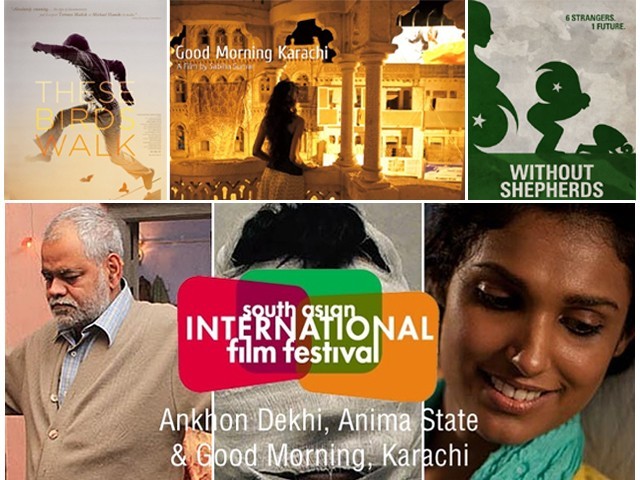
In the last few months, screenings of movies with a strong Pakistani connection has surged in the United States. It has been culturally very exciting and rewarding to watch these fantastic films and afterwards attend interactive sessions with their directors and crew-members. 
Saving Face, These Birds Walk, Without Shepherd, The Waves, Night Life, Lamha (Seedlings), The Reluctant Fundamentalist, Zinda Bhaag, Torn, Wounds of Waziristan, Good Morning Karachi and Anima State were presented at different film festivals in the United States. A few also went into commercial distribution.
While movies like Waar and Main Hoon Shahid Afridi did create a buzz in the Pakistani cinema market, most of the internationally released movies were overlooked by the mainstream Pakistani media.
What is the reason behind this phenomenon of about a dozen Pakistani independent movies suddenly appearing in the US?
There are, of course, multiple factors causing this recent surge, but my best guess is that it was influenced the most after Saving Face won the Academy Award (Oscar) for best short movie in early 2012.
An independent process was going on in the creative minds of local and international filmmakers who did not follow Lollywood techniques or the local mindset. These artists, with their unique vision and experimental style, are young and most probably grew up watching Pakistani TV dramas in the 80’s, during its zenith. They have been inspired by high standards of the past but are using the big screen to fight against the inertia of the social and political status quo.
These movies cover various genres such as drama, romance, documentary, musical, comedy, tragedy, action and thriller. They also cover a wide variety of emotional topics like poverty, terrorism, corruption, love, peace, wealth, art and cultural heritage.
Cultural critics of these movies often object to the negative portrayal of Pakistan, such as the abuse of women, homeless children and terrorism. This criticism often comes from people who have not seen these movies but have only heard or read about them. Like any other area of art and creativity, movies present the view of the director. One may agree or disagree with the message but this should not mean that the director has to present a flowery picture of the country.
Saadat Hasan Manto once said,
“If you cannot bear to hear my stories then your society is unbearable.”
This quote holds true for the above mentioned productions as well. These documentaries often present a chaotic picture of modern day Pakistan but rather than criticising the artists who highlight our cultural defects, if you follow Manto’s thought, they should work to improve the country’s social and moral standards. While documentaries try to present the truth, fiction knows no limits. Directors create movies out of their imagination.
Most of these productions have limited budgets. In spite of these financial restrains, they are very good movies. Nevertheless, they failed to achieve world-wide distribution or even distribution in Pakistan. Without proper advertisement and financial assistance from big film distributors, distribution of these productions is very difficult.
Unfortunately, the film industry is not supported by the government of Pakistan and it is very hard to find local producers and investors for international markets.
By qualifying for different film festivals and winning critical acclaim, the filmmakers hope to get the attention that would lead to worldwide distribution. They have to go through furious competition to get selected for film festivals, where many of them have won awards in different categories.
Regrettably, most of these movies are usually ignored by film critics and distributors, even if the audience present at the film festival enjoy and praise them.
It is very unfortunate that most of these films will never be screened in Pakistan, not just because of financial reasons but also because of strict censorship and lack of good cinema houses.
Pakistan’s strict and rigid censorship policy is a big stumbling block for freethinking and creativity.
Even though the state’s control over electronic media has loosened up a lot in the last decade, somehow this liberation has not changed the old scripted policies for film industry censorship. Also, some creative film directors have had limited and disappointing screenings in Pakistan because these films touch topics that are unfamiliar or uncomfortable for Pakistani audiences, who are accustomed to commercial Bollywood productions.
These movies have received mixed reviews from Americans. Usually, there is an interactive session after the premiere of a movie in a film festival, as these discussions play an important role in bridging the gap between different cultures. They enable the audience to get a greater insight into the film and provide the directors with an opportunity to emphasise their creative points of view and talk about different happenings behind the scenes.
In my experience, all of these discussions left a good impression of Pakistan, showing its diversity and cultural beauty. On a few occasions, there were Caucasians in the audience who had traveled, lived and worked in Pakistan, and they shared their positive views and image of its people.
Overall, I think these art productions are presenting a positive image of Pakistan and making cultural and social connections, which are currently much needed.
The American youth frequently dream about a career in Hollywood and study music, dance and acting from elementary school to university level to fulfill their dreams. A film industry career is not a common life goal for most middle class Pakistani children. There are virtually no schools and institutions in Pakistan to teach acting and movie production techniques.
Most of these independent film directors are self-taught and had started their careers making short music videos or documentaries. They worked hard against all odds to make their way up to the international market. Their original ideas, visions, creativity and determination have brought them to where they are today.
These people have instilled hope and vision for the upcoming generation of the filmmakers and opened new avenues for them to explore.
Most of these production teams are already working on their next film projects and I hope this film flow continues. There are rumours about Waar being released in the US after its international premier in the United Arab Emirates (UAE). While these talented artists look for big private sponsors and government subsidies and find new venues for their production, I want to support them by being present at the screening of all their movies in New York.
The spurt has not stopped after a short burst of wonderful production.
There are marvellous movies like Morqaye (Moor), Downward Dog, The Extortionist, Fatima and many others in the pipeline. Even if they do not have big budgets, they have catchy story lines, powerful imaginations and hard work to support them.
These non-traditional pictures may never be able to compete with commercial movies of Bollywood but can leave their own positive impression on minds of viewers and critics alike